Hello, everyone!
I currently feel like if this was LOTR, we would be at the part where the fellowship breaks up and everything goes downhill. I feel like COVID-19 has escalated so quickly and it can be scary when at first it was only going to be a week, then two, and now it could continue into 2021.
I think it's important to keep focusing on Tolkien's messages of hope, and friendship, and kindness though in this time. While we may not be able to see each other in person, we can still be here for each other and still reach out. No matter how grim it may look, we should still be hopeful that all of us will make it out on the other side stronger and more resilient than ever before. But most of all, even we meet Gollums of toilet paper we must be patient and resist losing our cool. Not harassing someone who coughs or sniffles. Wishing essential workers luck during this time, not hoarding cleaning supplies, and staying home to protect the immunocompromised and other vulnerable populations. I don't know about the rest of you, but staying at home and not going out (especially in such nice weather!) is incredibly difficult. It feels impossible. But I know we'll all get through fine!
I do wonder what Tolkien would write based off of this though. I imagine it could be a sickness sweeping through the land still, but possibly with a cure at least adjacent to people limiting contact. Perhaps a healer who eventually finds a magical cure through a difficult journey or quest, and then slowly the land and people heal as it slowly becomes a scar of the past? Or maybe a man thrown into the quest and has to take down the source of the disease, and finds a cure and slowly goes around the kingdom offering the cure to those affected? And more people join and help them? I know it would certainly have loss, devastation, catastrophe, and possibly even a romantic subplot but I do wonder what the actual focus of the story inspired by COVID-19. Speaking of, I'm surprised Tolkien never wrote anything (seemingly) based off the 1918 Spanish Flu Pandemic.
That's all for now,
Elendil
Wednesday, March 25, 2020

Happy Tolkien Reading Day!
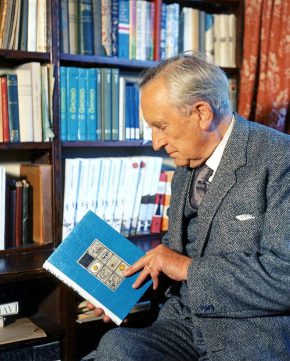 Celebrate Tolkien Reading Day on the Anniversary of the Destruction of the One Ring! All are encouraged to celebrate by reading something by Tolkien.
This year's theme is Nature and Industry. I'm reading "Leaf by Niggle." For more info, visit:
https://www.tolkiensociety.org/2020/03/today-is-tolkien-reading-day-3/?fbclid=IwAR0IRlvhtKo0byig6FNgMHxklW1KePaVGI20RZIktf5-mBr_SkD_0LqI1ZU
And to hear something appropriate from the Professor himself, listen to Tolkien reading Treebeard's song at https://www.youtube.com/watch?v=WO7QRVqLv40.
More links to Tolkien reading at https://sites.google.com/site/tolkiensartmythsandsources/links/music-and-audio-recordings
Feel free to listen and let us know what you think here to count as a comment for this week's blog requirement.
Medieval Medical Theory and Middle Earth Part 2: Doctrine of Signatures and the King's Touch
Welcome to Medieval Medicine Part 2: Electric Boogaloo! Kidding aside, this next facet of medieval medicine is rather curious. The doctrine of signatures was the idea that “like cures like”; that is, ailments concerning a certain body part or organ could be cured by an herb that looks like said body part. While this was first developed in the West by the Romans, this concept could be found in the traditional medicine practices of many cultures around the world. While ludicrous sounding today, determining the efficacy of a medicine back then was trial and error (case in point, Egyptians putting moldy bread on wounds without knowing what penicillin was). Thus, the idea that God or a higher power created plants to look like the body part probably was reassuring to the healer debating whether a berry was poisonous or not.
The doctrine of signatures ties in perfectly with athelas and Aragorn. As noted in The Return of the King, “Come athelas! Life to the dying in the king’s hand lying!” (Tolkien 1955). This suggests that the full healing effect of athelas is brought about when used by the king, providing an important connection with the herb and Aragorn. In addition, in regards to literal similarities, athelas is considered to be nothing more than a weed, having a pleasant smell but not pretty to look at. Only when it is put to its true purpose of healing does the plant live up to its name of kingsfoil. In a similar fashion, when Frodo and the company first meet Aragorn, he appears more of a potential foe than a kingly ally. However, as the story progresses Aragorn begins to take up the mantle of leadership, exposing his true nobility. Thus, the doctrine of signatures aids in both reinforcing and foreshadowing Aragorn’s development through a healing herb.
As a final note, the idea of the hands of a king having a greater healing effect harkens back to the king’s touch, the idea that God had bestowed healing power to the royal house, thus legitimizing their reign. Thus, Aragorn’s enhanced healing abilities with athelas not only makes perfect sense, but it is also an intriguing historical parallel.
Tuesday, March 24, 2020
Medieval Medical Theory and Middle Earth Part 1: The Four Humors and Frodo’s Wound
In the midst of what should have
been another Roaring 20’s which has instead become a pandemic (seriously, can
big band music at least come back to offset these terrible times?), what better
way to tie it into class but to explore the parallels between medieval medical
theory and the moments of healing shown in Tolkien’s works?
Perhaps one of the most central and well-known
concepts from medieval medicine is the idea of the four humors, which actually
was borrowed from the Greek and Romans. Composing of blood, phlegm, bile, and
black bile, each had properties of either hot or cold, wet or dry. Blood
(sanguine) is hot and wet, phlegm is wet and cold, black bile is dry and cold,
and bile is hot and dry. Illness is caused by imbalance among these four
humors, with the remedy oftentimes being giving the patient the exact opposite
humor. For an explanation from an anime (yes, you read that right), watch the
following clip: https://www.youtube.com/watch?v=GBdXpnM-M38
The
explanation starts at 3:40 until 5:00 by the way; apologies for the quality in
advance.
Now, what does this have to do with The
Lord of the Rings? Well, Frodo is stabbed by the Morgul blade, which causes
him to become cold. In addition, the illness is similar to the Black Breath of
the Ringwraiths, which from the name alone suggests a dry nature. Given this,
what is Aragorn’s temporary treatment of the wound? Bathing it with boiled
water with Athelas leaves, a mixture of hot and wet. Stay tuned, as a future
post will dive into the Doctrine of Signatures and the King’s Touch in relation
to Aragorn!
Springtime and Imagery
One
thing I really enjoyed about Sir Gawain and the Green Knight was the level of description and imagery that accompanied every section of the story. We were given descriptions of people, clothing, places, landscapes - every description given just as much as importance as the last. My favorite lines (or at least the ones that resonated most as I was reading it) were these:
“but then the weather in the
world makes war on the winter,
cold creeps into the earth,
clouds are uplifted,
shining rain is shed in
showers that all warm
fall on the fair turf,
flowers there open,
of grounds and of groves
green is the raiment,
birds are busy a-building
and bravely are singing
for the sweetness of the
soft summer that will soon be on the way:
and blossoms burgeons and blow
in hedgerows bright and gay;
then glorious musics go
through the woods in proud array.”
This
seemed very appropriate for the weather outside my house today. Among all the
stresses of the week, it's nice to stop and notice the world moving through such
familiar motions and see that things continue on being beautiful and warm and
connected even when we may feel disconnected and worried.
What
were your favorite descriptions from Sir Gawain? And why do you think
the author chose to put as much time into describing the landscape and the field-dressing
of the hunted animals as they put into the descriptions of people and actions?
Sunday, March 22, 2020
COVID-19 in Middle Earth
Hey everyone!
This is just a fun little exercise I thought might be interesting. I was wondering how the members of the fellowship would react to a pandemic (I am putting this before the events of LOTR).
My thought was that Frodo and Sam would probably limit their social interaction just a little, but in the end would still go out and spend time with friends for the most part. Merry and Pippin wouldn't change their habits at all. Merry might try to convince Pippin that they should, but eventually would agree that everyone's reactions are a bit extreme. Gandalf would probably be the one running around warning everyone and would end up getting the virus himself. Aragorn would probably find disappear into the wild until it was over, he might help Gandalf warn people for a while though. Boromir would be out preaching to his people that they needed to remain isolated and spreading the news through Gondor. He would also end up with the virus which would most likely kill him. Gimli would help the dwarves isolate their entire community so no one could get in or out and spread the virus. The dwarves would escape unscathed. I also think Legolas would do something similar and the elves of Mirkwood would be untouched by the virus. This is just what I thought they might do. Please comment down below and let me know what you think they would do!
This is just a fun little exercise I thought might be interesting. I was wondering how the members of the fellowship would react to a pandemic (I am putting this before the events of LOTR).
My thought was that Frodo and Sam would probably limit their social interaction just a little, but in the end would still go out and spend time with friends for the most part. Merry and Pippin wouldn't change their habits at all. Merry might try to convince Pippin that they should, but eventually would agree that everyone's reactions are a bit extreme. Gandalf would probably be the one running around warning everyone and would end up getting the virus himself. Aragorn would probably find disappear into the wild until it was over, he might help Gandalf warn people for a while though. Boromir would be out preaching to his people that they needed to remain isolated and spreading the news through Gondor. He would also end up with the virus which would most likely kill him. Gimli would help the dwarves isolate their entire community so no one could get in or out and spread the virus. The dwarves would escape unscathed. I also think Legolas would do something similar and the elves of Mirkwood would be untouched by the virus. This is just what I thought they might do. Please comment down below and let me know what you think they would do!
Saturday, March 21, 2020
The Fellowship of the Ring, Book II, Chs 2-5 Narrative Choices Part II
For this exercise, I was torn between two alternative options I considered for the bridge scene. Either Aragorn or Boromir managed to reach Gandalf before he fell or because they were out on the bridge when it broke, all three fell.
I decided to go with the latter, having all three fall down into the abyss together. Legolas must rally the others and get them out of Moria.
As per our class discussion, a lot of people wanted to keep the fellowship together. In my alteration, I actually tore the fellowship apart even more, much earlier on. Obviously, this would have drastic effects on the rest of the story. A more significant amount of the company, if not all left, might have gone with Frodo, as he wouldn’t have had that nudge from Boromir to rush off and leave. All the help the individual communities, like Rohan, got from the members of the fellowship would probably never happen. Additionally, because Legolas would be propelled to take on a leadership role, his and Gimli’s friendship might never have blossomed. Aragorn would not have been able to grow as a leader as we saw him do. And Boromir might possibly have come out alive, very changed, along with Gandalf and Aragorn. It’s quite shocking to see just how much would be altered if even one slight thing was changed. It was very interesting to explore the different options Tolkien could have chosen.
Tiny Scenes
Throughout the Lord of the Rings, Tolkien inserts small moments in scenes that seem inconsequential and never lead to much of anything important in his narrative.
For example, when the Fellowship is leaving Bree, Sam tosses an apple he was chewing at Bill Ferny. Look at this passage and try to figure out why Tolkien bothered to insert this tiny scene. What is its purpose in the overall story? What does Tolkien gain from adding it to the tale? What does it say about Sam? Why is it an apple and not a biscuit or a potato?
Can you think of any other tiny scenes that seem unnecessary to the plot, but which you could argue are important to Tolkien's work for other reasons?
For example, when the Fellowship is leaving Bree, Sam tosses an apple he was chewing at Bill Ferny. Look at this passage and try to figure out why Tolkien bothered to insert this tiny scene. What is its purpose in the overall story? What does Tolkien gain from adding it to the tale? What does it say about Sam? Why is it an apple and not a biscuit or a potato?
Can you think of any other tiny scenes that seem unnecessary to the plot, but which you could argue are important to Tolkien's work for other reasons?
Understanding Sources
How does some knowledge of Tolkien's medieval sources aid or change your understanding of his fiction? Why is it important to study such influences in a class such as ours? Or maybe it is not important? Feel free to argue either position!
Monday, March 16, 2020
Coronavirus (COVID-19) Rant
While this may be a bit off-topic with regard to the main theme of the course, we have discussed the coronavirus in class. I am completely for social distancing and quarantine if need be, and I do not think that this disease should just be dismissed or ignored, but the widespread hysteria-influenced hoard-like shopping is really, really frustrating. People are acting out of fear which is then scaring everyone else, perpetuating a cycle of hysteria that will not benefit anyone. Hoarding toilet paper isn't going to protect you from the Coronavirus and neither is an abundance of canned goods. People need to practice caution by continuously washing their hands, avoiding large crowds, and getting tested if they show symptoms of the disease. Sorry for this probably long-winded rant but it just feels as though things are getting out of hand because of sensationalism.
Sunday, March 15, 2020
Differences in Stories
Hello, all!
I have noticed that many of Tolkien's stories seem to be very consistent with one another with tone but then you'll occasionally come upon moments or entire lives that seem... out of place almost? Like, Tolkien's world definitely feels real (otherwise not as many people would be so obsessed!) but I feel like you can tell when he was writing the main body of certain tales in his life depending on how it feels. For example, Beren and Lúthien overall is almost a feel-good love story that makes you feel the power of love and gives you the feeling that love really can help you achieve the impossible. It seems as if their story was written whenever Tolkien felt love sick for his wife. However, with Túrin Turambar you can tell that many parts of the story were written right after WWI because it has a much darker, bloodier overtone with many battles and young men becoming responsible and scarred at young ages and cities doomed to fall no matter what, etc. I feel as if this is a reflection of the real world at times. We of course have our own issues, and sometimes we feel as if we defeat the impossible through love or friendship, or we go on life-altering quests where we feel we can never return home, but other times some of our lives are tragic the entire time and yet the person persists, and I suppose it can become crystal clear just how much Tolkien is influenced by real life.
Although it makes me wonder - what events did Tolkien see, or experience, or hear about that inspired him to write the events of Lord of the Rings? Was it many things? Of course, Frodo's story is very relateable of course in a strange way but given as you can tell the sources of inspiration for his other tales, I am wondering where Frodo's tale (and the Fellowship) came from. Or could it have just been from his creativity?
That's all,
Elendil
I have noticed that many of Tolkien's stories seem to be very consistent with one another with tone but then you'll occasionally come upon moments or entire lives that seem... out of place almost? Like, Tolkien's world definitely feels real (otherwise not as many people would be so obsessed!) but I feel like you can tell when he was writing the main body of certain tales in his life depending on how it feels. For example, Beren and Lúthien overall is almost a feel-good love story that makes you feel the power of love and gives you the feeling that love really can help you achieve the impossible. It seems as if their story was written whenever Tolkien felt love sick for his wife. However, with Túrin Turambar you can tell that many parts of the story were written right after WWI because it has a much darker, bloodier overtone with many battles and young men becoming responsible and scarred at young ages and cities doomed to fall no matter what, etc. I feel as if this is a reflection of the real world at times. We of course have our own issues, and sometimes we feel as if we defeat the impossible through love or friendship, or we go on life-altering quests where we feel we can never return home, but other times some of our lives are tragic the entire time and yet the person persists, and I suppose it can become crystal clear just how much Tolkien is influenced by real life.
Although it makes me wonder - what events did Tolkien see, or experience, or hear about that inspired him to write the events of Lord of the Rings? Was it many things? Of course, Frodo's story is very relateable of course in a strange way but given as you can tell the sources of inspiration for his other tales, I am wondering where Frodo's tale (and the Fellowship) came from. Or could it have just been from his creativity?
That's all,
Elendil
Further exploring the placement of Boromir's death.
I'm posting here to try to expand on our discussion of why Boromir's death is where it is.
I think that one of the reasons that Tolkien chose to place Boromir's death at the beginning of Two Towers is to emphasize the increasing seriousness and danger of the story. If Boromir had died at the end of fellowship, it would have made it more of a routine climax at the end of the book type of event, whereas by putting it at the beginning of Two Towers we get this sense of "oh shit, this is happening, and it's only the first chapter? What's going to happen next?"
Of course another reason that we briefly mentioned in class is commercial. Cliffhangers are of course good for book sales, however looking at it again I realized there is foreshadowing, but no clear indication that something is wrong or that anyone is about to die. This makes me think that the cliffhanger aspect is a smaller part of the calculus than I had thought.
I think that one of the reasons that Tolkien chose to place Boromir's death at the beginning of Two Towers is to emphasize the increasing seriousness and danger of the story. If Boromir had died at the end of fellowship, it would have made it more of a routine climax at the end of the book type of event, whereas by putting it at the beginning of Two Towers we get this sense of "oh shit, this is happening, and it's only the first chapter? What's going to happen next?"
Of course another reason that we briefly mentioned in class is commercial. Cliffhangers are of course good for book sales, however looking at it again I realized there is foreshadowing, but no clear indication that something is wrong or that anyone is about to die. This makes me think that the cliffhanger aspect is a smaller part of the calculus than I had thought.
Thoughts On Changing Tolkien's Works
Hello all!
So we discussed a lot this week in class what we would change in Lord of the Rings and how that would affect the story. Many people came up with some really creative and interesting ways on how they would change the story. Their versions would all probably be wonderful books but the thing is if we changed any aspect of his stories we would end up having to alter a lot which would cause his stories to lose their Tolkienness. By this I mean they would lose the key aspects that make his books what they are which include fellowship, characters that are REAL, fantasy that is taken seriously, and hundreds of connection to his life and other works.
I did think these exercises this week were interesting and very informative because it made me realize how much I would miss the original version of Tolkien's works if we changed them. In conclusion I appreciated the exercises for what they taught me but I would not change Tolkien's stories ever.
Thank you!
So we discussed a lot this week in class what we would change in Lord of the Rings and how that would affect the story. Many people came up with some really creative and interesting ways on how they would change the story. Their versions would all probably be wonderful books but the thing is if we changed any aspect of his stories we would end up having to alter a lot which would cause his stories to lose their Tolkienness. By this I mean they would lose the key aspects that make his books what they are which include fellowship, characters that are REAL, fantasy that is taken seriously, and hundreds of connection to his life and other works.
I did think these exercises this week were interesting and very informative because it made me realize how much I would miss the original version of Tolkien's works if we changed them. In conclusion I appreciated the exercises for what they taught me but I would not change Tolkien's stories ever.
Thank you!
In-Class Exercise: Putting a Twist on The Lord of the Rings
In class, we discussed how making alternations to The Lord of the Rings could potentially negatively or positively, depending on your point of view, impact the narrative of the story. What I found interesting was the kind of unanimity of the class in believing that Gandalf, one of the most integral characters in J.R.R. Tolkien's works, had to die. Whether it be under different circumstances for different reasons, we concluded that the company wouldn't have been able to succeed in their nearly impossible quest of destroying the one ring had Gandalf never died and undergone his transformation from Gandalf the Grey to Gandalf the White. It's just interesting to analyze how death, something that is normally considered sad and horrible, impacted so much of the story. Furthermore, it's weird that we were able to recognize the "need" for death in Tolkien's The Lord of the Rings.
Galadriel and Lothlorien
The sequence of chapters taking place in the forest of Lothlorien is among my favorites in the entirety of The Lord of the Rings. It offers a respite from the high-stakes drama that immediately preceded in the mines of Moria and the plot-turning betrayal at Amon Hen that breaks the Fellowship and sends them off on their own directions and quests. Lothlorien is the calm before the storm, and as we saw in class each chapter contains highly relevant moments and events that shape the rest of the story.
Lothlorien is also a demonstration of Tolkien's masterful artfulness. The forest is unique and filled with lore. The trees are lined with silver bark and adorned with golden leaves while music runs through the air reminding travelers of elven tales long past. Tolkien allows his reader to escape the darkness of the mines and rest along with his reader. That is perhaps why these chapters are so enjoyable. They accomplish their purpose both for the fictional characters within the story and also those in the real world glancing at this strange world through words on a page.
Additionally, these Lothlorien chapters introduce the reader to Galadriel, one of the most perplexing characters in all of Tolkien's writings. I feel as though the movie adaptations of this elven queen did not do her as much service as she required. She was portrayed as deeply enigmatic and frankly a little odd. While the viewer grew to trust and appreciate her, the sequence where Frodo offers her the Ring after looking into the Mirror is a little unsettling, though not altogether inaccurate.
Reading these chapters gives the reader a better look into who Galadriel is and why she is relevant. Her testing of each of the members of the Fellowship foreshadows her own trial and also the events to come involving Boromir. She tested each with their great desire apart from the Quest, and it does seem that she sees the loyalties of each--with the possible exception of Boromir. She lavishes all the company with gifts and supplies, uncharacteristic of the Lorien elves to do, and she herself sees them off with much encouragement and hope.
Finally, Galadriel recognizes that the destruction of the Ring would result in the end of her people's way of life. However, she does not resist or protest the Quest but accepts her fate doing what she can to help the Fellowship be successful. Galadriel is imperfect, as we discussed in class, but in her, we see a character who is willing to forsake her temptatious desires and play whatever part she could for the good of a world she would not be a part of.
Lothlorien and Galadriel represent what is noble in Middle-Earth. It is difficult, it seems, for the Fellowship and the reader to leave those fair woods never to return in the course of the story. Nevertheless, they represent some of that which the Fellowship fights for. Of course, with the destruction of the Ring, Lothlorien and its inhabitants would "diminish" but the traits those fair woods represent continue on as a reminder of that which is good and worth facing great challenges for.
Lothlorien is also a demonstration of Tolkien's masterful artfulness. The forest is unique and filled with lore. The trees are lined with silver bark and adorned with golden leaves while music runs through the air reminding travelers of elven tales long past. Tolkien allows his reader to escape the darkness of the mines and rest along with his reader. That is perhaps why these chapters are so enjoyable. They accomplish their purpose both for the fictional characters within the story and also those in the real world glancing at this strange world through words on a page.
Additionally, these Lothlorien chapters introduce the reader to Galadriel, one of the most perplexing characters in all of Tolkien's writings. I feel as though the movie adaptations of this elven queen did not do her as much service as she required. She was portrayed as deeply enigmatic and frankly a little odd. While the viewer grew to trust and appreciate her, the sequence where Frodo offers her the Ring after looking into the Mirror is a little unsettling, though not altogether inaccurate.
Reading these chapters gives the reader a better look into who Galadriel is and why she is relevant. Her testing of each of the members of the Fellowship foreshadows her own trial and also the events to come involving Boromir. She tested each with their great desire apart from the Quest, and it does seem that she sees the loyalties of each--with the possible exception of Boromir. She lavishes all the company with gifts and supplies, uncharacteristic of the Lorien elves to do, and she herself sees them off with much encouragement and hope.
Finally, Galadriel recognizes that the destruction of the Ring would result in the end of her people's way of life. However, she does not resist or protest the Quest but accepts her fate doing what she can to help the Fellowship be successful. Galadriel is imperfect, as we discussed in class, but in her, we see a character who is willing to forsake her temptatious desires and play whatever part she could for the good of a world she would not be a part of.
Lothlorien and Galadriel represent what is noble in Middle-Earth. It is difficult, it seems, for the Fellowship and the reader to leave those fair woods never to return in the course of the story. Nevertheless, they represent some of that which the Fellowship fights for. Of course, with the destruction of the Ring, Lothlorien and its inhabitants would "diminish" but the traits those fair woods represent continue on as a reminder of that which is good and worth facing great challenges for.
Subscribe to:
Posts (Atom)